
Choosing a hearing aid is about more than better hearing. It should also fit easily into your daily routine, including how you use, charge, and maintain it.
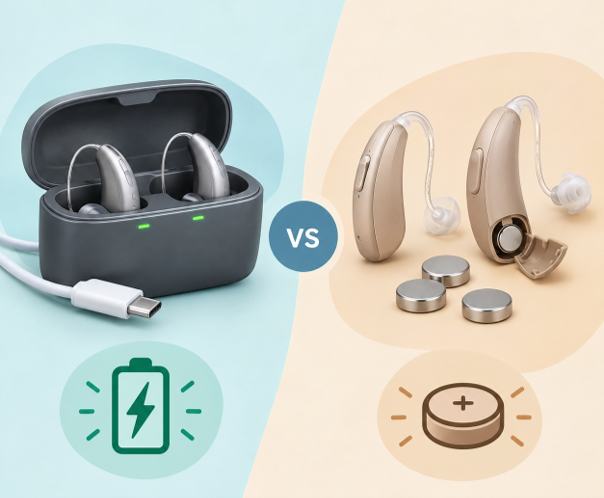
A common choice is between rechargeable hearing aids and traditional battery-powered models. Both amplify sound, but they differ in how they are powered and maintained. Rechargeable models offer the convenience of regular charging, while battery-powered aids allow you to replace the battery whenever needed.
There’s no single best option. The right choice depends on your hearing needs, lifestyle, dexterity, travel habits, and personal preferences.
“The right hearing aid is not simply about choosing rechargeable or battery-powered. It should be comfortable, easy to manage, and suited to your hearing needs and daily routine.”— Rama Vaidyanathan, Audiologist in Chembur
What Are Battery-Powered Hearing Aids?
Battery-powered (or “disposable battery”) hearing aids run on small, round zinc-air batteries — the flat, coin-shaped cells you’ve probably seen on a card at the pharmacy. They’re activated by air: you peel off a sticky tab, wait about a minute for the battery to “wake up,” then pop it into the hearing aid.
These batteries come in a handful of standard sizes, each marked with a universal colour code so they’re easy to reorder — size 10 (yellow), 312 (brown), 13 (orange), and 675 (blue). Hearing aids that are smaller have smaller batteries too and they don’t last as long. The battery life varies from a few days to a couple of weeks, depending on the size and number of hours the device will be used each day before needing replacement.
For decades this was the only option, and it’s still popular — the batteries are cheap, widely available, and a fresh one gives instant full power with no waiting for a charge.
The four common hearing-aid battery sizes
Size 10
Tap to expand
The smallest. Used in tiny, discreet in-the-ear aids. Because it’s small, it needs changing most often — often every 3–5 days.
Size 312
Tap to expand
A very popular mid-size for many behind-the-ear and in-the-ear models. Usually lasts around 3–7 days.
Size 13
Tap to expand
Larger, so it holds more power. Common in behind-the-ear aids and often lasts around 6–10 days.
Size 675
Tap to expand
The biggest, used in powerful aids for more significant hearing loss. Longest life — often 9–20 days.
Rechargeable vs Battery Hearing Aids: Key Differences
Rechargeable hearing aids do away with disposable batteries altogether. Instead, they use a sealed lithium-ion battery — the same type found in most phones and laptops — which sits in a charging case overnight. By morning, the device is fully charged and ready for the day ahead. At a hearing aid center, an audiologist can also help you understand whether a rechargeable model suits your hearing needs and daily routine.
So how do the two options really compare? Below is a simple, side-by-side look at the factors that matter most in everyday use.
Rechargeable vs disposable battery, compared
Longer bars aren’t always “better” they show where each type leans stronger.
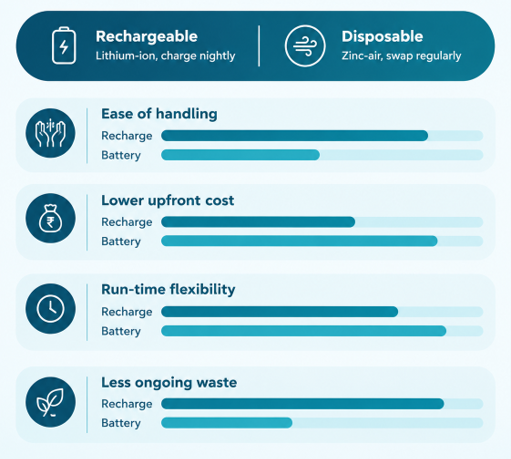
In plain terms: rechargeables win on convenience and no fiddly battery-swapping, while disposables win on lower upfront price and the freedom to carry spares for endless run-time. There’s no fiddling with tiny cells if dexterity is a concern — a big plus for many older users or anyone with arthritis.
Not sure which format is right for you? An audiologist can help you find the right fit based on your hearing needs, comfort, and daily routine — and you can try different options before deciding.
Which Is Better: Rechargeable or Battery Hearing Aids?
Here’s the honest answer: there’s no single winner. The “better” option is the one that matches how you live. Someone who values a simple nightly routine and struggles with small objects will likely love rechargeables. A frequent traveller heading somewhere without reliable power, or someone on a tighter upfront budget, may prefer disposables.
Use the quick chooser below to see which way you lean — then confirm it with a professional fitting.
Which type suits you? A 20-second check
Pick the option that sounds most like you — your likely match appears below.
Also, keep in mind that not all hearing aid styles are available in rechargeable models at this time. The smallest and most inconspicuous in-the-ear devices that are available frequently use disposable batteries due to limited space in the ear for the batteries and electronics. If you want a device you can hardly see, that could be a factor in your decision.
How Long Do Rechargeable Hearing Aids Last on One Charge?
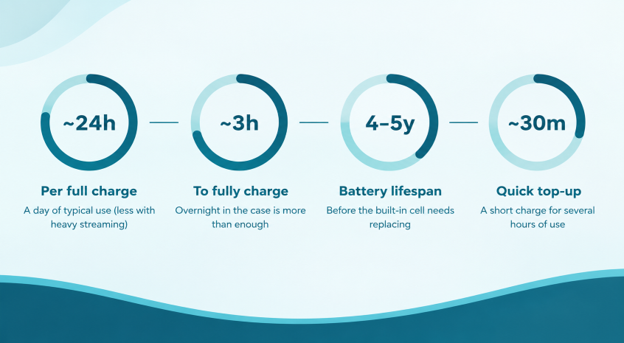
Most modern rechargeable hearing aids will comfortably get you through a full day — typically around 24 hours of use — though that number drops a little if you stream audio from your phone or TV often, since streaming draws more power. A full charge usually takes about three hours in the case, and many chargers also offer a quick top-up option, giving you several extra hours of use from just a short burst of charging.
It’s worth keeping two different timeframes in mind here. The first is daily run-time, or how long a single charge lasts you each day. The second is battery lifespan, or how many years the built-in battery holds up before it starts to wear down. Like any rechargeable battery, it will gradually hold less charge as time goes on, and after about four to five years, it may need to be professionally replaced.
Don’t ignore the signs of hearing difficulty. A timely hearing check can help you stay connected to conversations, family and everyday life. Get in touch to book your hearing assessment.
Rechargeable hearing aids by the numbers
Typical figures for today’s lithium-ion rechargeable devices.
What Should You Consider Before Choosing a Hearing Aid?
The battery question is just one piece. The device also has to match your degree of hearing loss, your lifestyle, and your comfort with technology. A good clinic walks you through all of it. Here’s a sensible order to think it through.
Five things to weigh before you choose
Work through these with your audiologist for a confident decision.
1. Your hearing needs first
The type and degree of hearing loss decide which devices can actually help. This is where a proper hearing test comes in — before any talk of batteries.
2. Dexterity & eyesight
Can you comfortably handle tiny batteries and controls? If not, rechargeables and larger models are far easier to live with.
3. Daily routine & travel
Regular access to power favours rechargeables. Frequent trips off the grid may favour disposables and a pocket of spares.
4. Budget — now and later
Weigh the higher upfront cost of rechargeables against years of buying disposable batteries. Factor in the total, not just day one.
5. Follow-up & support
Fitting, adjustments, and aftercare matter more than the spec sheet. Choose a clinic that supports you long after the purchase.
Frequently asked Questions
1. Which is better, rechargeable hearing aids or battery hearing aids?
Both are not right for all people. The convenient and easy to use rechargeable type and the more flexible battery-powered type. Your selection depends on your hearing requirements, lifestyle and comfort.
2. How long will the rechargeable hearing aid last?
Most Rechargeable hearing aids will last for one day on a charge, but may be affected by heavy streaming. Their built-in battery also wears out over time and will need to be replaced.
3. If the hearing aid is rechargeable, what will happen if it goes flat?
The hearing aids will then not function until they are recharged. To prevent this, you can keep them charged overnight. It is also helpful to plan ahead when traveling or when out at night for an extended period of time.
4. Which type of hearing aids are more affordable: battery or rechargeable?
You can either get a battery powered model which may be cheaper in the long run or you can get a rechargeable model, which will reduce the need to buy batteries as often. Compare prices taking up both the cost and maintenance into account.