
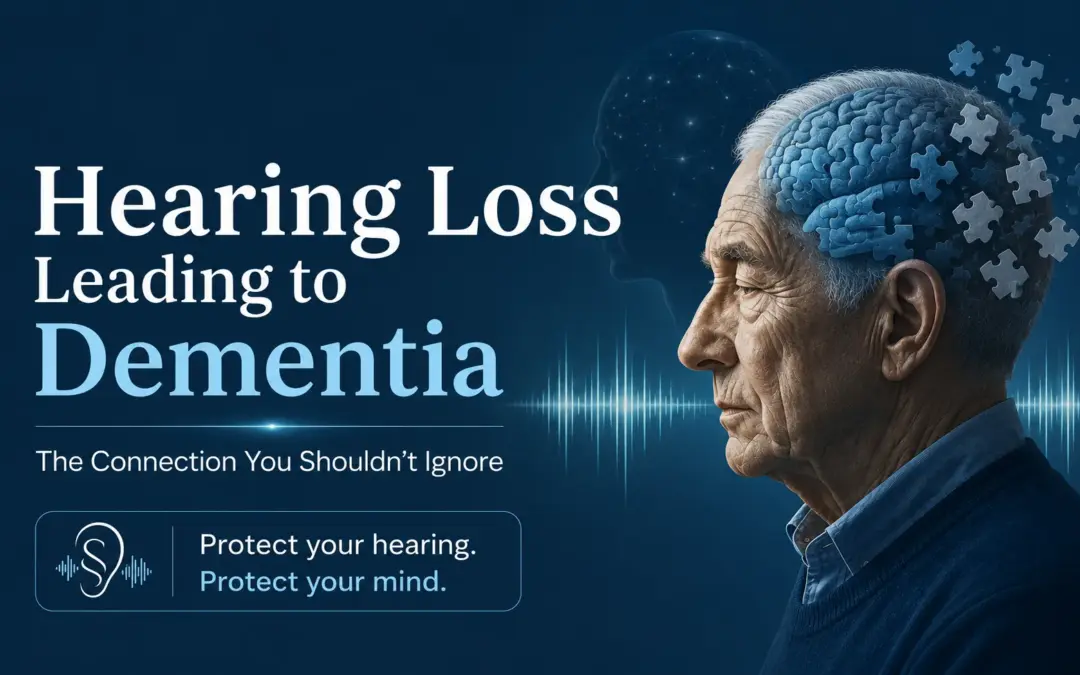
Hearing loss is often seen as a communication problem, making conversations harder or the television louder. But hearing also involves the brain, which works constantly to process and understand sounds.
Untreated hearing loss has been linked to a higher risk of cognitive decline and dementia, although it does not mean hearing loss directly causes dementia. Researchers are still exploring this connection. What is clear is that addressing hearing difficulties early can support healthy aging and help people stay connected with those around them. For some people, this may include getting a hearing assessment and exploring suitable hearing aids or other hearing support through a hearing aid center.
“Hearing is not just about the ears. Addressing hearing difficulties early can help people communicate better and stay connected with the world around them.”— Mrs. Rama Vaidyanathan, Audiologist
How are Hearing Loss and Dementia Connected?
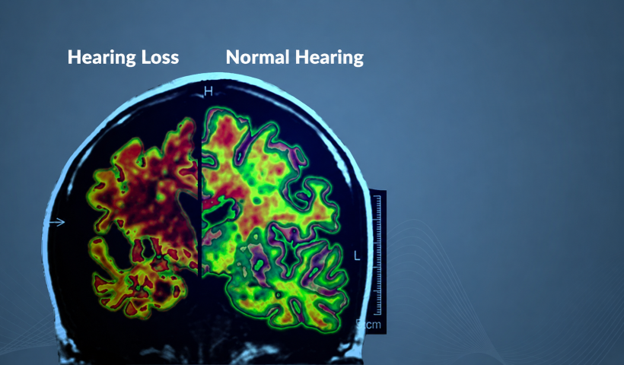
When hearing starts to fade, the brain works harder just to keep up with conversation. What used to feel effortless dinner chats, family gatherings, following someone across a noisy room can suddenly take real concentration.
That extra effort is one theory behind the link. There’s another: people who find conversations frustrating often start avoiding them, leading to fewer social outings and more time spent alone both linked to cognitive decline.
Age and cardiovascular health may also play a role, since both can affect hearing and brain health at once, making it hard to say what’s driving what.
None of this means hearing loss leads to dementia. The research shows a connection between the two not that one causes the other.
Can Untreated Hearing Loss Affect the Brain?
- More effort to listen
The brain works harder to understand unclear or incomplete sounds. - Harder to follow conversations
Background noise can make speech more difficult to understand. - Communication becomes tiring
Constantly concentrating on conversations can lead to mental fatigue. - Less social interaction
Hearing difficulties may cause people to avoid conversations or gatherings. - Frustration and isolation
Ongoing communication difficulties can affect emotional and social wellbeing. - Changes in cognitive engagement
Reduced communication and social participation may affect overall cognitive wellbeing.
Noticing changes in your hearing? Schedule a professional hearing assessment to understand your hearing levels and discuss the next steps suited to your needs.
Hearing Loss Is More Common Than You May Realise
Hearing loss can affect people at different stages of life — from childhood to older age.
Hearing loss can affect people at different stages of life — from childhood to older age.
What Happens During a Hearing Assessment?
A hearing professional will usually begin by asking about your hearing concerns, when you first noticed them and situations where hearing is particularly difficult. This helps put the test results into context.
Depending on your needs, the assessment may include Pure Tone Audiometry, which checks how softly you can hear different sounds across a range of frequencies.
The results can help identify:
- Whether hearing loss is present
- The degree of hearing loss
- Which frequencies are affected
- Whether one or both ears are affected
- Whether further evaluation may be needed
A proper assessment is useful even when hearing loss seems mild. Some people adapt to gradual hearing changes without realising how much they have started compensating.
Getting a baseline hearing assessment can also make it easier to monitor changes over time.
Don’t ignore the signs of hearing difficulty. A timely hearing check can help you stay connected to conversations, family and everyday life. Get in touch to book your hearing assessment.
Can Early Treatment of Hearing Loss Help?
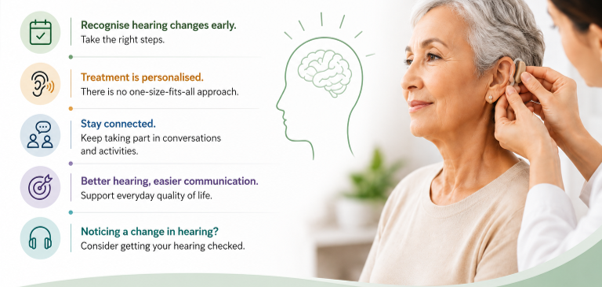
Early evaluation and treatment of hearing loss, including a timely hearing test, can support better communication, social connection and overall quality of life.
Frequently asked Questions
Does hearing loss cause dementia?
Not necessarily. Hearing loss is linked to a higher risk of cognitive decline and dementia, but that doesn’t mean it directly causes dementia in every person. Several different factors likely play into that relationship.
Can hearing aids prevent dementia?
There’s no conclusive evidence yet that hearing aids prevent dementia. That said, research suggests treating hearing loss may help slow cognitive decline in some older adults who are already at higher risk.
Is mild hearing loss linked to cognitive decline?
Even mild hearing difficulty can make conversations more demanding, particularly in noisy environments. Research has found an association between hearing impairment and cognitive decline, though the relationship is shaped by several other factors.
What are the early signs of hearing loss?
Common signs include asking people to repeat themselves, turning up the television volume, struggling to follow conversations in noisy places, difficulty hearing on the phone, and feeling tired after trying to listen closely.
Should older adults have regular hearing tests?
Regular hearing checks can be worthwhile, particularly when someone notices changes in communication or difficulty hearing everyday sounds. A hearing assessment can identify changes that might otherwise go unnoticed.